Coaching vs Therapy
What you need to know before you invest in your healing


This past week celebrated love, powerful astrology, and—let’s be honest—another wave of stress and upheaval in the world. Transitions are happening fast, whether we’re ready or not. And, if that wasn’t enough, we’ve got reports of an asteroid that may or may not wipe out a city in ten years.
Stay Calm - No pressure.
As the collective tumbles forward, eyes hypervigilantly open or tightly closed for protection, I have noticed several “Wellness Gurus” getting major media attention. Many of them have little more than a polished brand and a well-funded marketing team. It used to frustrate me, but I’ve come to accept that social media can make anyone famous. Years ago, when I worked in magazines, I was hired to oversee fitness shoots to ensure the models and photographers were demonstrating correct exercises. I was also featured in magazines for my expertise. But when social media exploded, brands took over.
Instead of highlighting experienced professionals, magazines and media outlets started pushing trainers, coaches, and wellness influencers who were affiliated with big-name brands. Lines between marketing and expertise became blurred.
The problem? This trend continues to extend deeper into mental health and wellness and often has little care for the WELLbeing of viewers. Recently, I saw three different media segments promoting:
A $4,000 women’s retreat for healing grief
A $16,000 weekend intensive to “heal trauma”
A self-proclaimed guru selling a book on letting go which is all you need for happiness and a fulfilling life.
None of these people had actual mental health training. No clinical background. No supervision. Just a big price tag and a lot of promises.
I don’t have a viral branding strategy, a million-dollar PR team, or a self-help book (yet 😉), but I do have extensive experience in coaching and psychotherapy. So, let’s break it down:
Coaching vs. Therapy: What's the Difference?
I dislike the term “expert” because it suggests that one person has all the answers while the client has none. Instead, I believe:✨ You already have the answers within you✨ As a therapist, I help you uncover them in your own time
Some people process things quickly, while others need more time. My job is to support you where you are, help you move forward, and know when to gently push or hold space.
When to Hire a Coach vs. a Therapist
Ask yourself:
✔️ Do I want to break a pattern around a specific theme (relationships, money, career, etc.)?
✔️ Do I thrive with structured guidance and action steps?
✔️ Am I feeling deeply anxious, lost, or emotionally overwhelmed?
✔️ Have I experienced trauma or a fear that I can’t seem to move past?
If you answered YES to the first two: A coach may be helpful.
If you answered YES to the last two: A licensed therapist is a better fit.
Important Distinctions
🚫 Trauma-Informed ≠ Trauma Therapy
🚫 Somatic Training ≠ Somatic Therapy
🚫 Therapeutic Art ≠ Art Therapy
A coach can provide goal-setting, accountability, and motivation but does not diagnose or treat mental health conditions. A therapist has years of clinical education, training, and ethical obligations to ensure your well-being.
How to Find a Legit Coach or Therapist
Whether you’re hiring a coach or a therapist, here’s what to look for:
A Free Consultation – This is typically 15-20 minutes to assess if you’re a good fit for each other.
Clear Training & Specialization – They should be able to explain where they trained and the type of clients they specialize in.
Experience – Therapists may list degrees, certifications, articles, lectures but likely will not have client testimonials due to confidentiality, but coaches should have testimonials or some way of looking into their training and experience.
Questions to Ask Before Hiring:
For Both Coaches & Therapists:
What is your background and training?
Have you worked with clients who had my issue?
What’s your main approach or technique?
For Coaches:
How many sessions do you recommend?
What is the structure of your sessions?
Do you have direct experience with what you’re coaching on?(e.g., A business coach should have a business background. A fitness coach should have anatomy training.)
For Therapists:
Are you licensed?
What type of therapy do you practice, and how do you think it would benefit me?
Do you take insurance or do you offer a sliding scale?
Red Flags to Watch Out For
❌ Fear-Based Sales Tactics – “If you don’t sign up today, you’ll miss out!”
❌ Overpromising Results – “I guarantee you’ll heal in six sessions!”
❌ No Credentials – They can’t provide any proof of training. They have a book and no cleint experience.
❌ Pressure to Commit – They require large up-front payments.
❌ A “Guru” Mentality – They position themselves as the only one who can “save” you and often discredit anyone not them.
My Approach: The Best of Both Worlds
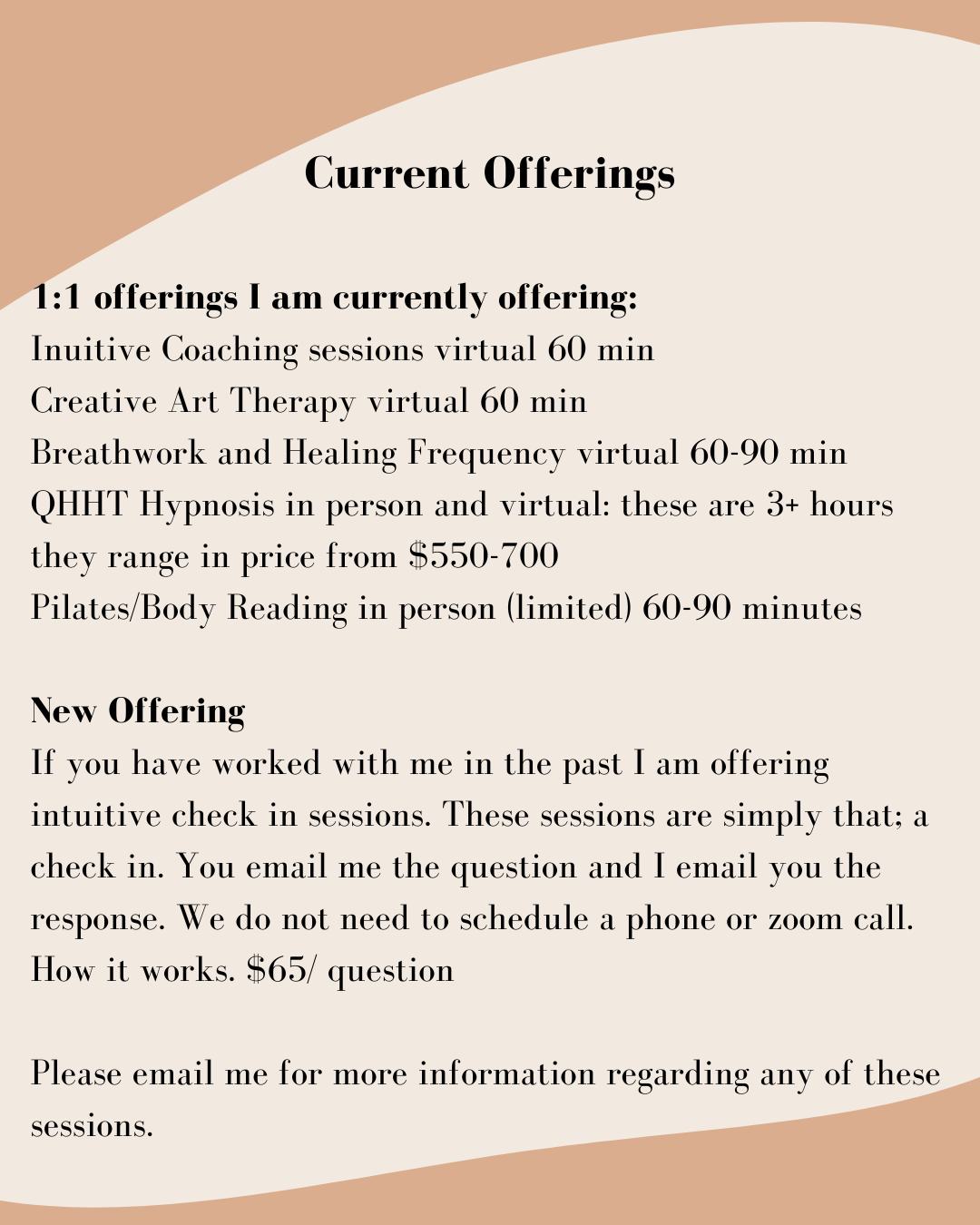
I sometimes advertise myself as a Wellness Coach or Intuitive Coach because I blend multiple modalities. Most of my work isn’t traditional psychotherapy, but rather whole-body wellness and intuitive integration. I have training and certifications in physical movement (yoga and Pilates), emotional therapy (Creative Art Therapy, Body-Oriented Therapy, Eriksonian Hypnosis, Quantum Healing Hypnosis), and energetic modalities (Reiki, Intuitive Learning, Akashic Records and breathwork).
Here’s how it works:
🔹 Therapy Sessions: I am a Licensed Creative Art Therapist in New York State. I use a combination of Art Therapy or Visualization, Body-Oriented Therapy, and Eriksonian Hypnosis Techniques to uncover root issues, process emotions, and integrate healing at a deep level. These are weekly sessions, I only work with NYS residents and I DO NOT take insurance but DO sliding scale when needed.
🔹 Intuitive Coaching: We focus on clarity, breakthroughs, and spiritual guidance in a structured, goal-oriented way. I may also incorporate channeling information through Akashic Records, visualization to help release blocked energy, Body-Oriented techniques, meditation or energy healing when needed. I focus on life coaching and wellness coaching. I refer when more specific health and medical treatment is needed. These are often one time or monthly sessions as the client needs.
The key difference?
Therapy is a long-term healing process
Intuitive Coaching is about immediate clarity or set frame of sessions for relief and action
If you’re unsure which is right for you, let’s talk. I always guide clients toward what will truly serve them—whether that’s working together or referring them elsewhere.
I work best with clients who are on a physical or emotional journey and are ready to actively explore, reframe, and integrate patterns and lessons. While I address love, relationships, grief, money, career, and creative blocks, my focus is primarily on the physical and emotional aspects of these experiences. I am not a business coach or a nutritionist—my work is centered on deepening the connection between the body, emotions, and soul.
Journal Prompt
✨ What kind of support do I need right now?
✨ What fears come up when I think about exploring my desire, issue or need?
✨ How do I want to feel at the end of my healing journey?
Final Thought: You are your own healer. Whether you choose a coach, therapist, or intuitive guide, the right person will empower you—not make you dependent on them.
If you’re interested in working with me, I offer a free consultation to see if we’re the right fit. Let’s connect. 💛

❄️ Winter Treat
Years ago, when I worked at a Pilates studio on East 12th Street, I had a favorite winter ritual—treating myself to a hot juice from Liquiteria. I loved its sweet and spicy flavor, and on cold days, it was pure comfort in a cup 🫖✨. Now that Liquiteria has closed and I work from my home studio, I decided to recreate it myself.
🍵 Ingredients:
🍏 3 green apples
🫚 1 large chunk of ginger
🍋 1 lemon
🌶️ Cayenne to taste
Directions:
1️⃣ Use a juicer to extract the juice from apples, ginger, and lemon.
2️⃣ Transfer the juice to a pot and bring it to a boil.
3️⃣ Add cayenne and mix well.
4️⃣ Pour into your favorite mug and enjoy! ☕❄️
Stay warm and cozy! 💛🔥
✨ MOVEMENT BREAK ✨

The Pilates Swan Dive
is an integration of the physical, emotional, and spiritual self through practice, challenge, and celebration. 💛
Physical: Strengthens the back, legs and abdominals (basically the whole body), while improving spinal flexibility and control.
Emotional: Encourages trust while diving into the fear of falling and opens the heart to the world as your eyes look forward into your future.
Spiritual: Symbolizes surrender and flow, inviting you to embrace challenges with grace and resilience.
How to Practice:
Start Position: Lie on your stomach with legs extended (little toes pressing into the mat), arms reaching forward, and forehead resting on the mat.
Engage & Lift: Inhale, engage your core, press into the hands as you lift your chest, torso, and arms off the mat in a controlled extension.
Rock & Flow: Exhale and let your body rock forward, balancing on your ribs, as you reach through the legs and lift them toward the ceiling, then inhale to rock back.
Repeat with Breath: Continue the rocking motion, feeling the control and power of your body as it flows and moves energy through your spine.
End with Stillness: After a few repetitions, rest in Child’s Pose, arms by side, hands by feet, forehead to mat breathing deeply to integrate the movement and feel the energy your body created.
Celebrate Your Body & Growth:
Set an intention before starting—what are you opening yourself to?
Acknowledge —lean into the strength and trust required.
Celebrate —feel the connection between your body, emotions, and spirit.
This exercise embodies strength, surrender, and trust—all essential for true integration. ✨